
Famous Queen Anne Architecture: 6 Surviving American Masterpieces
1. Carson Mansion (Eureka, California)

The Pinnacle of Victorian Extravagance Often considered the grandest Victorian home in America, the Carson Mansion is the ultimate expression of the Queen Anne style. It was built in 1886 by lumber baron William Carson, who utilized his vast resources to showcase the limitless possibilities of wood craftsmanship. The exterior is a masterclass in architectural excess, featuring a highly complex, asymmetrical roofline, a soaring tower, and virtually every type of Victorian detailing imaginable, from intricate gingerbread trim to elaborate spindle-work. While it operates as a private club today and is not open to the public, it remains one of the most photographed buildings in the world and a definitive textbook example of the era’s opulence.
2. The “Painted Ladies” – Postcard Row (San Francisco, California)
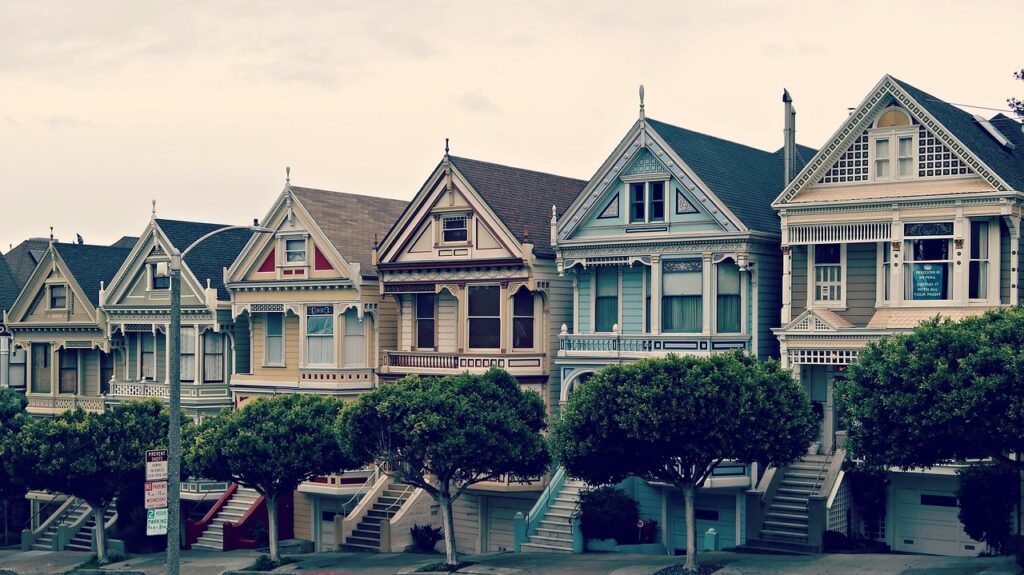
The Pop Culture Icons Situated gracefully across from Alamo Square Park along Steiner Street, this specific row of Victorian houses is recognized globally. Built between 1892 and 1896, the Painted Ladies perfectly demonstrate how the Queen Anne style was adapted for dense, urban townhouse living. Despite their narrow footprints, they feature the style’s hallmark asymmetrical facades, prominent bay windows, and steep gables. Their name comes from the practice of using three or more contrasting vibrant paint colors to highlight the intricate architectural details. Today, they serve as the enduring symbol of San Francisco’s historic residential charm.
3. Winchester Mystery House (San Jose, California)

A Bizarre Masterpiece of Endless Construction While famous for its eccentric interior—featuring stairs that lead to ceilings and doors that open into blank walls—the exterior of the Winchester Mystery House is a sprawling, magnificent Queen Anne estate. Sarah Winchester, widow of the firearms magnate, continuously expanded the house from 1884 until her death in 1922. The result is a massive, asymmetrical labyrinth covered in textured wood shingles, crowned with countless turrets, cupolas, and crestings. The home also features exquisite stained glass windows and elaborate woodwork, showcasing the height of Victorian design wrapped in a captivating ghost story.
4. Hale House (Los Angeles, California)
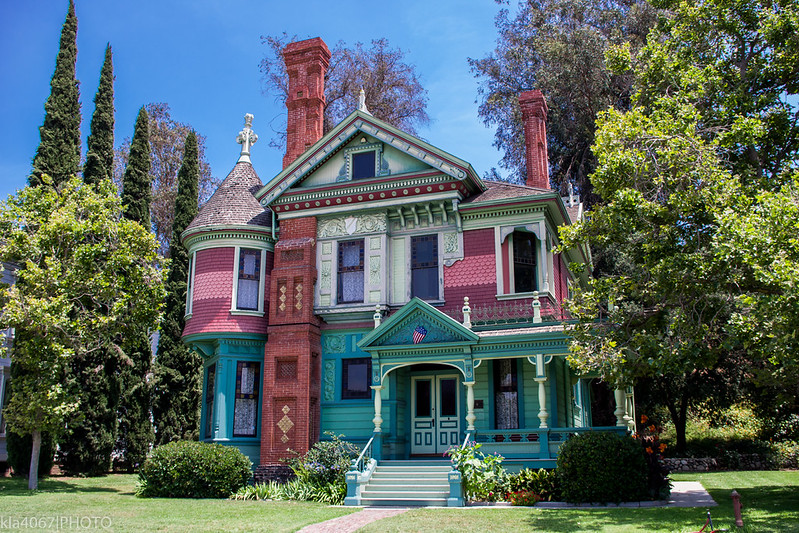
The Traveling Victorian Now safely preserved at the Heritage Square Museum, the Hale House (built in 1887) is often described as the most photographed historic building in Los Angeles. It was relocated several times to save it from demolition before undergoing a meticulous restoration in the 1980s that brought back its wildly vibrant, historically accurate exterior colors. The house is a vibrant showcase of Queen Anne elements, heavily featuring decorative “fish-scale” shingling, ornate turned-wood pillars on the wraparound porch, and a highly prominent, commanding corner turret.
5. Emlen Physick Estate (Cape May, New Jersey)

The East Coast Landmark Cape May is renowned as a Victorian time capsule, and the 18-room Emlen Physick Estate, built in 1879, is its crown jewel. Designed by the acclaimed American architect Frank Furness, this mansion leans slightly toward the “Stick Style” but is fundamentally a Queen Anne masterpiece. It is characterized by its dramatic, oversized corbeled chimneys, heavy wooden brackets, and deeply asymmetrical massing. Now operating as a museum, it provides a perfect representation of how affluent families on the East Coast interpreted the architectural trends of the late 19th century.
6. Rosson House (Phoenix, Arizona)
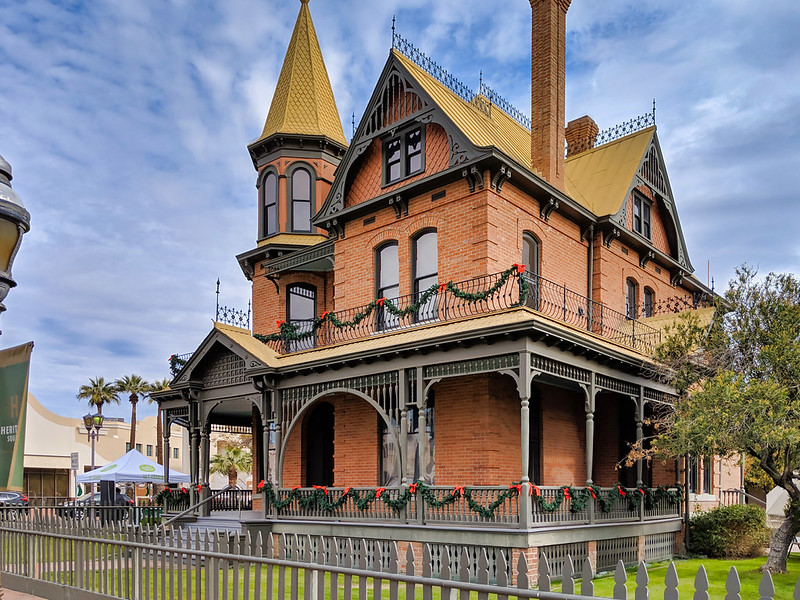
The Desert Adaptation Built in 1895, the Rosson House proves that the Queen Anne style was not limited to wooden structures on the coasts. This striking home illustrates how the architectural trend conquered the arid Southwest by utilizing fired red brick as its primary building material. Despite the masonry construction, it retains the unmistakable Queen Anne silhouette, featuring intricate wooden porch detailing, asymmetrical bays, and an iconic, octagonal corner tower topped with a distinctive onion dome. Fully restored, it now sits as a historic centerpiece in downtown Phoenix.

