
The Wide Open Dream: 6 Iconic 1950s Ranch Neighborhoods
1. Lakewood, California
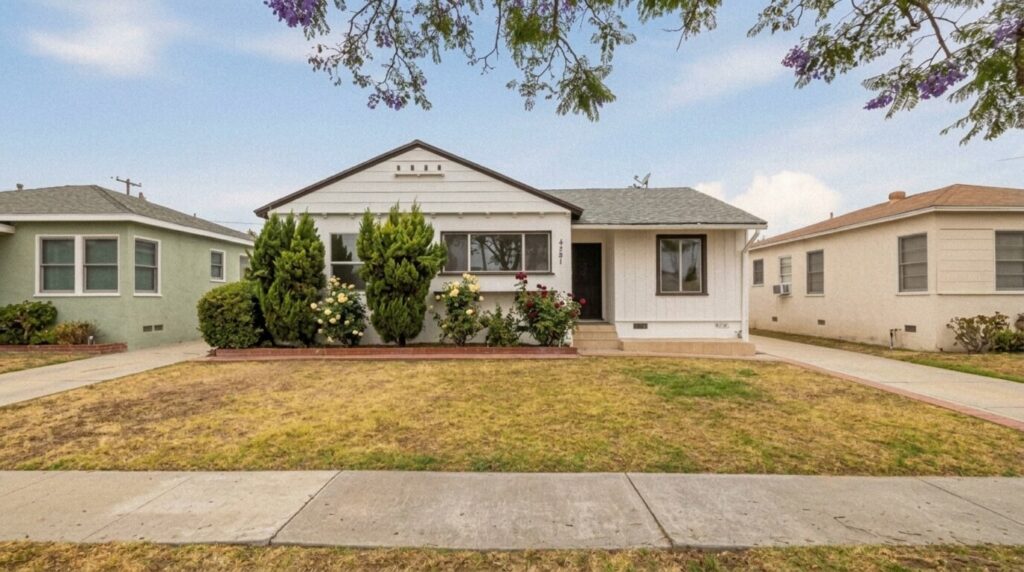
The “City as New as Tomorrow” If Levittown defined the 1940s, Lakewood defined the 1950s. Built rapidly between 1950 and 1953, it was the largest planned community in America at the time, transforming agricultural fields into a sprawling grid of over 17,000 homes. Lakewood perfected the mass-produced California Ranch: single-story stucco homes with low-pitched roofs, attached garages, and large picture windows. It was the quintessential auto-centric suburb, complete with one of the nation’s first massive regional shopping malls. Historical societies provide abundant public domain imagery of this legendary suburban explosion.
2. Levittown, Pennsylvania

The East Coast Embraces the Ranch When William Levitt began building his second massive mega-suburb in Pennsylvania in 1952, he realized the public’s taste had shifted. He abandoned the cramped Cape Cod and introduced “The Levittowner”—a modern, sprawling Ranch home. These houses featured open-concept kitchens that flowed into living rooms, radiant heated floors, and a carport seamlessly integrated into the roofline. The transition of Levittown from Capes to Ranches is deeply documented in federal archives, offering incredible royalty-free blueprints and promotional photography.
3. Rancho Estates (Long Beach, California)

The Father of the Ranch House You cannot discuss the 1950s without mentioning Cliff May, the self-taught architect who is widely credited with inventing the California Ranch style. In 1953, May partnered with developer Ross Cortese to build the Lakewood Rancho Estates in Long Beach. He brought high-end, custom Ranch design to the middle class. These homes featured board-and-batten siding, exposed ceiling beams, and floor-to-ceiling glass walls that completely erased the boundary between the living room and the backyard patio. Because of Cliff May’s legendary status, these homes are heavily photographed and available in open-source architectural databases.
4. Arapahoe Acres (Englewood, Colorado)

The Historic Modernist Suburb Built between 1949 and 1957, Arapahoe Acres was the very first post-WWII residential subdivision to be listed on the National Register of Historic Places. Developer Edward Hawkins blended the mainstream Ranch house with Frank Lloyd Wright’s Usonian principles and International Style modernism. The resulting homes feature sweeping horizontal lines, flat or low-slung roofs, and incredible use of natural stone and brick. Because of its National Register status, the Historic American Buildings Survey (HABS) has thoroughly documented the neighborhood, providing spectacular, copyright-free photography.
5. Twin Palms Estates (Palm Springs, California)

The Glamorous Desert Ranch In 1957, the Alexander Construction Company, working with architects Palmer & Krisel, began building Twin Palms. They took the standard suburban Ranch and injected it with Space Age glamour. These homes are famous for their dramatic “butterfly” roofs, breeze-block walls, and backyard swimming pools, creating the ultimate mid-century desert oasis. This neighborhood helped define “Desert Modernism.” As highly coveted architectural landmarks today, Wikimedia Commons is packed with vibrant, high-resolution images of these heavily stylized Ranch homes.
6. Hollin Hills (Alexandria, Virginia)
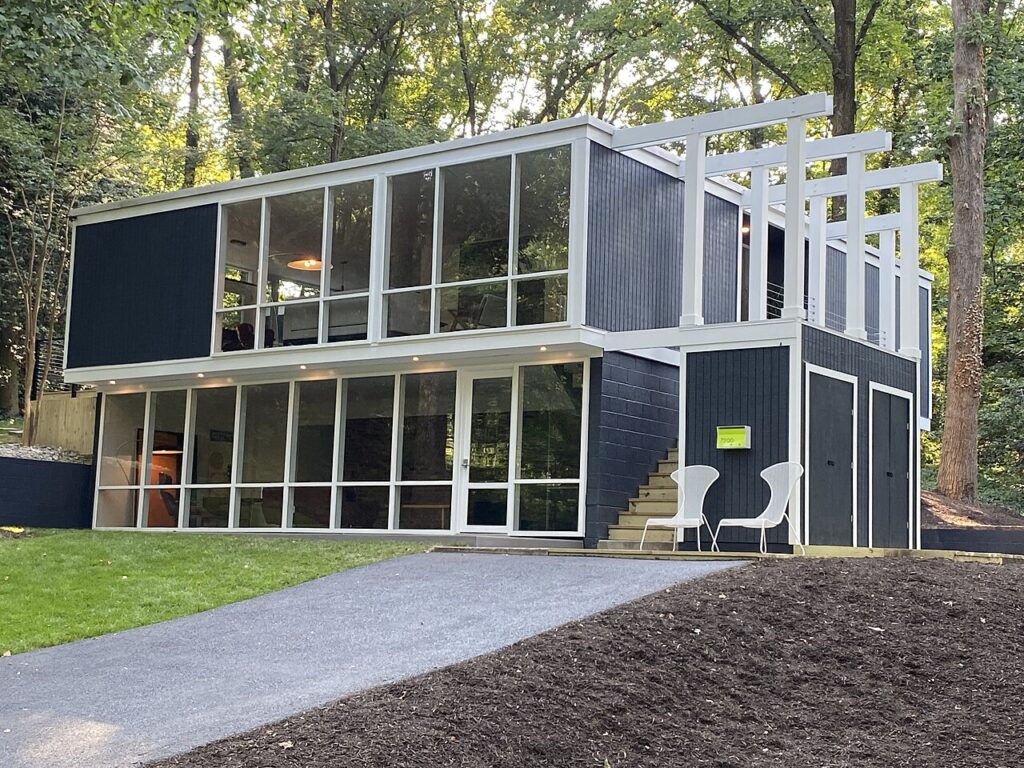
The East Coast Woodland Ranch It is important to show that the Ranch wasn’t exclusively a West Coast phenomenon. Built throughout the 1950s by developer Robert Davenport and architect Charles Goodman, Hollin Hills is a breathtaking collection of mid-century modern Ranches nestled into the rolling, wooded hills of Virginia. Rather than bulldozing the trees, the homes were custom-sited to fit the natural landscape. They feature massive walls of glass and low, flat rooflines that blend into the forest. As a heavily protected historic district, historians and residents have made plenty of stunning, royalty-free photography available.

